In precision machinery, automotive components, hydraulic systems and industrial equipment, axial positioning is a small detail that can directly affect the stability, reliability and service life of the whole assembly.
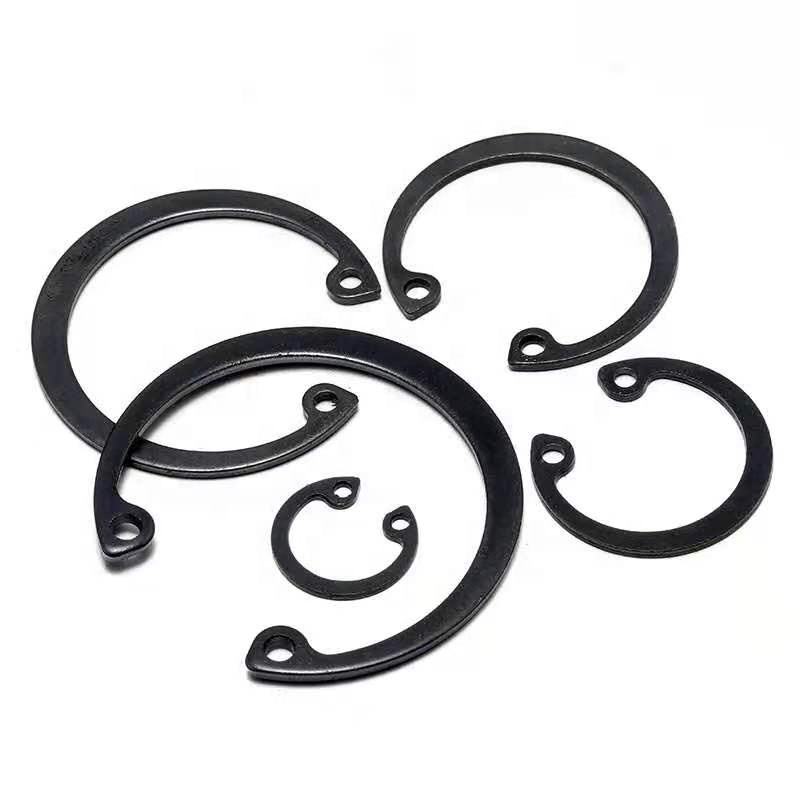
A double-layer spiral retaining ring is a compact, earless and elastic retaining component designed for reliable axial retention. Compared with traditional stamped circlips or snap rings, it provides more uniform load distribution, better space efficiency and improved performance in applications where vibration, rotation and compact assembly are important.
For custom fastener suppliers, OEM component manufacturers, precision machining companies and industrial parts distributors, double-layer spiral retaining rings can be a useful solution when a standard retaining ring is not suitable for the customer’s assembly.
What Is a Double-Layer Spiral Retaining Ring?
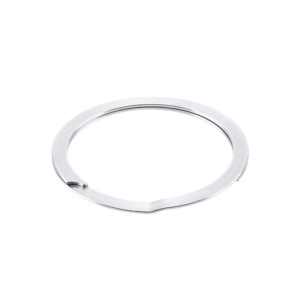
A double-layer spiral retaining ring is formed by coiling flat wire into a continuous spiral structure. Unlike traditional snap rings with ears or lugs, the spiral retaining ring has a nearly continuous contact surface.
This structure allows the ring to sit inside a shaft or bore groove and provide axial retention without protruding ears. The double-layer design increases axial holding strength while maintaining a compact profile.
This makes it suitable for assemblies that require:
- Axial positioning
- Compact installation space
- Uniform load distribution
- High vibration resistance
- Reliable retention under rotation or impact
- Custom size and material options
Typical Applications
Double-layer spiral retaining rings are widely used in mechanical assemblies where stable axial positioning is required.
Typical application areas include:
Automotive and New Energy Vehicles
In automotive and electric vehicle applications, spiral retaining rings can be used for crankshafts, piston pins, transmission systems, motor rotors, gear assemblies and other rotating components.
They help prevent axial movement and component loosening under high-speed operation.
Hydraulic and Pneumatic Equipment
In hydraulic cylinders, valves, pistons and pneumatic assemblies, retaining rings can act as locking and positioning components.
They are suitable for applications that require compact retention and reliable performance under pressure and movement.
Precision Machinery
In gears, pulleys, couplings, bearings, instruments and other precision mechanical assemblies, double-layer spiral retaining rings provide accurate axial positioning while reducing the risk of stress concentration.
Industrial Equipment and OEM Components
For OEM metal components, custom machinery and industrial assemblies, spiral retaining rings can be used as a practical retaining solution when standard circlips do not meet strength, space or assembly requirements.
Advantages Over Traditional Stamped Circlips
Compared with traditional stamped retaining rings or circlips, double-layer spiral retaining rings offer several important advantages.
1. 360° Uniform Load Distribution
The continuous spiral structure provides more even contact around the groove. There are no protruding ears or open lug areas that may create stress concentration.
This helps improve fatigue resistance and axial load performance in demanding applications.
2. Compact and Space-Saving Design
The earless design allows a cleaner and more compact assembly. This is especially useful in precision equipment, automotive components and small mechanical assemblies where installation space is limited.
The double-layer structure can provide higher axial force within a limited groove space.
3. Better Vibration Resistance
In high-speed, heavy-load or vibration environments, the double-layer structure helps absorb and distribute impact force.
This can improve component stability and extend service life compared with retaining components that concentrate stress in one area.
4. No Stamping Scrap and Flexible Customization
Spiral retaining rings are made from flat wire through coiling instead of stamping from sheet material. This helps reduce material waste and can improve material utilization.
For custom sizes, this process can also be more flexible than stamped rings that require dedicated tooling for every design.
5. Smooth Appearance and Easier Assembly
Because there are no protruding ears, the assembly appearance is cleaner. The ring can be installed by spiraling it into the groove rather than expanding it with traditional retaining ring pliers.
Materials and Surface Treatments
Different applications require different material and surface treatment options.
Common material options include:
- Carbon spring steel
- High-strength carbon steel
- Stainless steel 304
- Stainless steel 316
- 17-7PH stainless steel
- Beryllium copper
- Special alloys for high-temperature or demanding environments
Common surface treatments may include:
- Zinc plating
- Black oxide
- Phosphating
- Dacromet coating
- Passivation
- Other finishes based on customer requirements
For corrosive environments, stainless steel or passivated finishes may be preferred. For industrial heavy-load applications, spring steel with suitable heat treatment and anti-corrosion coating is commonly used.
Manufacturing Process
A high-quality custom spiral retaining ring depends on stable material, controlled forming and proper heat treatment.
A typical manufacturing process may include:
1. Flat Wire Rolling and Straightening
Round wire is rolled into flat wire through controlled rolling processes. The flat wire is then straightened to ensure stable forming quality.
2. CNC Precision Coiling
The flat wire is coiled into the required spiral shape using CNC coiling equipment. This process controls the ring diameter, pitch, number of turns and end shape.
3. Heat Treatment
Heat treatment is used to remove internal stress and provide the required elasticity, hardness and mechanical performance.
4. Surface Treatment and Inspection
Depending on the application, the rings may receive plating, passivation or other surface treatments.
Dimensional inspection, elasticity checks and visual inspection are important to ensure reliable performance in assembly.
Installation Guidelines
Proper installation is important for retaining ring performance.
Before installation, the shaft or bore groove should be clean and free from burrs, oil and damage. The groove dimensions should match the retaining ring design.
Unlike traditional circlips, a spiral retaining ring does not need to be expanded by retaining ring pliers. The installer can place one end of the ring into the groove and spiral it into position turn by turn until it is fully seated.
Forced pressing or hammering should be avoided, as this may twist the ring or cause permanent deformation.
For removal, the end of the ring can be lifted with a small tool, then removed along the spiral direction.
Custom Manufacturing Support for Fastener and Component Suppliers
We manufacture custom fasteners, non-standard metal parts and drawing-based components according to customer drawings, samples or technical requirements.
For overseas fastener manufacturers, custom fastener suppliers, OEM component suppliers and local machinery parts manufacturers, we can support selected custom parts as an additional production source.
Our role is to provide:
- Supplementary production capacity
- Custom retaining rings
- Drawing-based fasteners
- Cold formed components
- CNC machined metal parts
- Special washers, spacers, pins and bushings
- Cost-effective manufacturing for repeat orders
- Support for parts that are difficult to produce in-house
If a customer needs a retaining ring, spacer, washer, bushing or other small metal component that cannot be sourced from a standard catalog, we can review the drawing and evaluate a suitable manufacturing process.
When to Consider a Custom Spiral Retaining Ring
A custom double-layer spiral retaining ring may be suitable when:
- Standard circlips do not provide enough axial holding strength
- The assembly space is limited
- Protruding ears are not acceptable
- The component works under vibration or rotation
- The customer needs a cleaner and more compact assembly
- The application requires stainless steel, spring steel or special alloy material
- A custom size or non-standard groove design is required
For stable repeat orders, custom manufacturing can help component suppliers and OEM manufacturers improve product reliability while maintaining cost control.
Request a Drawing Review
If you are looking for custom spiral retaining rings, double-layer retaining rings, non-standard fasteners or drawing-based metal components, please send us your drawing, sample or purchasing list.
We will review the structure, material, size, surface treatment and application requirements carefully.
Whether you are a fastener supplier, OEM component manufacturer, CNC machining shop or industrial parts distributor, we can support selected custom parts that require flexible manufacturing, reliable quality and cost-effective production.